
Yuval Avidani
Author
Key Takeaway
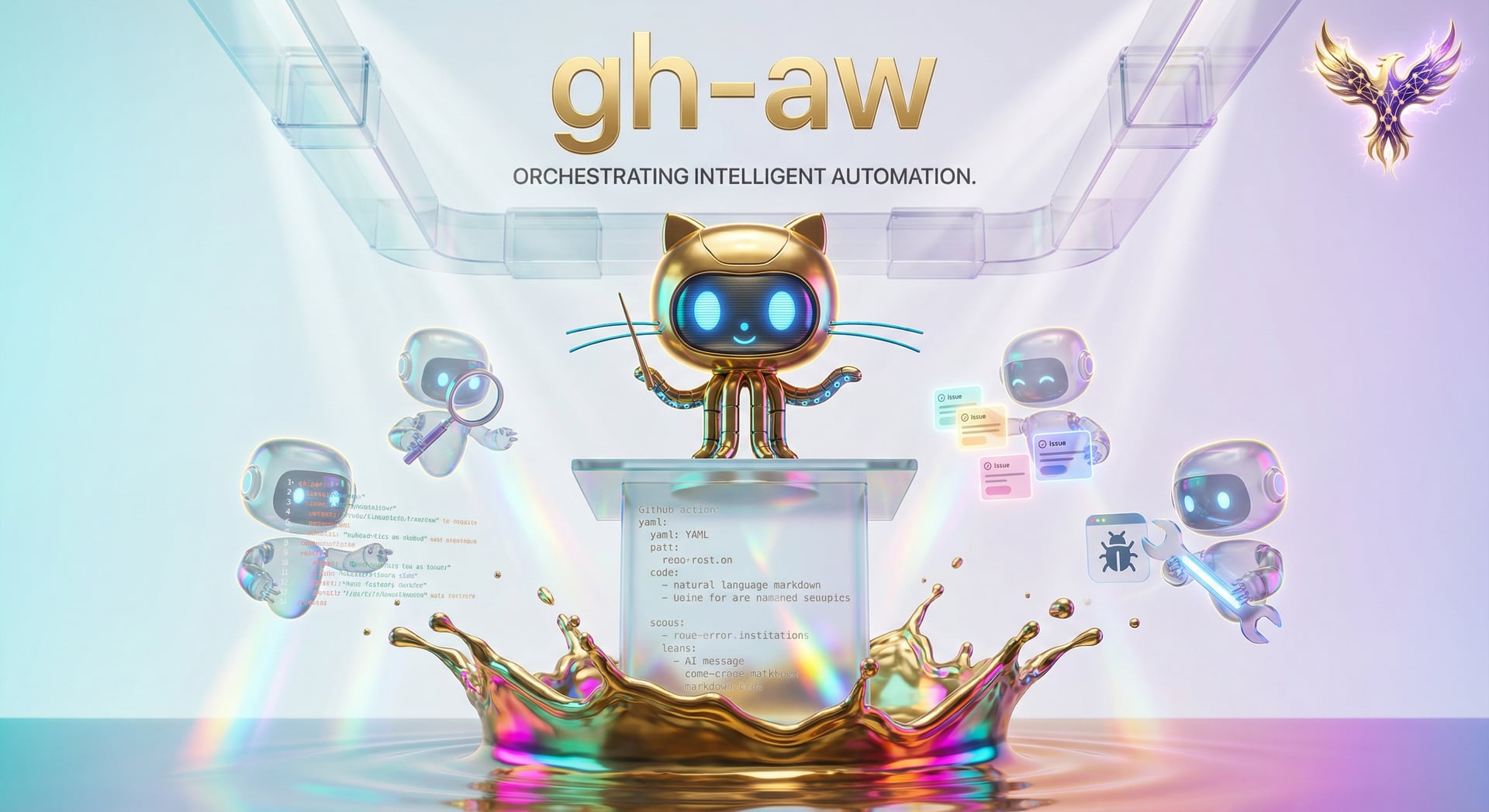
GitHub Agentic Workflows (gh-aw) is a framework that lets us define CI/CD automation using natural language markdown instead of traditional YAML configuration. Created by GitHub, it enables AI agents to perform complex, multi-step tasks like bug triage, code reviews, and automated fixes - all running securely within GitHub Actions with built-in security guardrails.
What is GitHub Agentic Workflows?
GitHub Agentic Workflows (gh-aw) is a framework that fundamentally changes how we approach CI/CD automation. The project gh-aw solves the problem of integrating intelligent AI agents into our development workflows without sacrificing security or control.
Instead of writing rigid YAML configuration files that break with one wrong indentation, we write markdown documents in natural language that describe what we want to happen. The system then orchestrates AI agents to execute these workflows directly inside GitHub Actions - the same secure infrastructure we already trust for our CI/CD pipelines.
The Problem We All Know
We've all been there. We spend hours debugging YAML syntax errors in our CI/CD configurations. A single misplaced space or tab can break our entire deployment pipeline. We've built sophisticated test suites, deployment processes, and automation workflows - but they're all locked into rigid, explicit instructions.
Meanwhile, AI agents have become incredibly capable. They can analyze code, understand context, propose solutions, and even write fixes. But integrating these intelligent agents into our existing CI/CD infrastructure? That's been a nightmare of custom scripting, API integrations, and security concerns.
The fundamental issue is that our CI/CD systems were designed in an era before AI agents. They expect us to tell them exactly what to do, step by step. They don't know how to work with agents that can reason, make decisions, and adapt to different situations.
How GitHub Agentic Workflows Works
Think of GitHub Agentic Workflows like the difference between programming in assembly language versus giving instructions to a smart assistant. Instead of specifying every single step, we describe the outcome we want and let the agent figure out how to get there.
Here's what makes this different: workflows are defined in markdown - the same format we use for documentation. We write descriptions like "When a bug report comes in, analyze the error message, search the codebase for related code, identify the root cause, and propose a fix." The agent understands this intent and executes the necessary steps.
The system runs these agentic workflows directly inside GitHub Actions. This means we get all the security benefits we already rely on: isolated execution environments, permission controls, audit logs, and integration with our existing infrastructure.
Quick Start
Here's how we get started with GitHub Agentic Workflows:
# Install the gh-aw CLI extension
gh extension install github/gh-aw

# Initialize a new agentic workflow
gh aw init

# Create a workflow file in .github/workflows/
# Instead of YAML, we write markdown
cat > .github/workflows/bug-triage.md << EOF
# Bug Triage Workflow

When a new issue is labeled as 'bug':
1. Analyze the error message and stack trace
2. Search the codebase for related code
3. Identify potential root causes
4. Add a comment with analysis
5. Suggest relevant team members to assign
EOF

# The agent handles the rest
gh aw run bug-triage
A Real Example
Let's say we want to automate our code review process. Here's what a real agentic workflow looks like:
# Code Review Assistant Workflow

## Trigger
When a pull request is opened

## Tasks

### Initial Analysis
- Review the changed files
- Identify the type of change (feature, bugfix, refactor)
- Check for common issues:
  - Potential security vulnerabilities
  - Performance concerns
  - Missing test coverage
  - Documentation updates needed

### Detailed Review
- Analyze code complexity
- Check for adherence to our style guide
- Look for potential edge cases
- Verify error handling

### Feedback
- Post a review comment with findings
- Suggest specific improvements with code examples
- Flag any blocking issues that require human review
- Approve simple changes automatically (with human override)

## Security Constraints
- Read-only access to repository
- Cannot merge or approve without human confirmation
- All actions logged for audit
Key Features
- Natural Language Workflows - We write what we want to happen in markdown, not YAML. Think of it like writing instructions for a smart colleague instead of programming a machine. The agent interprets our intent and figures out the implementation details.
- Built-in Security Guardrails - By default, agents run with read-only permissions. Think of it like giving someone observer access to our codebase - they can look and analyze, but can't make changes without explicit approval. Sensitive operations require human authorization through approval gates.
- Sandboxed Execution - Every agentic workflow runs in an isolated environment within GitHub Actions. It's like giving each agent its own locked room to work in - they can't access or affect anything outside their designated workspace. This prevents any single agent from compromising our entire system.
- Multi-Step Task Automation - Agents can perform complex sequences like "analyze this bug, search for similar issues, propose a fix, run tests, and create a PR." Instead of us writing separate scripts for each step and wiring them together, the agent orchestrates the entire process based on our high-level description.
- GitHub Actions Integration - Workflows run on the same infrastructure we already use for CI/CD. This means we get the same reliability, logging, secrets management, and security controls we've already configured. No new infrastructure to maintain or learn.
When to Use GitHub Agentic Workflows vs. Alternatives
Traditional CI/CD tools like Jenkins, CircleCI, or standard GitHub Actions workflows are great when we know exactly what needs to happen and can script it explicitly. They're deterministic and predictable - the same input always produces the same output.
GitHub Agentic Workflows shine when we need intelligent decision-making and adaptation. Use this when we want automation that can handle variability and make contextual decisions - like triaging bugs based on error patterns, reviewing code with understanding of our architecture, or suggesting fixes based on similar historical issues.
For pure agent orchestration outside of CI/CD context, tools like LangChain or CrewAI offer more flexibility. But if we want our agents integrated into our development workflow with GitHub's security model, gh-aw is purpose-built for that.
The key question: Do we need our automation to understand context and make decisions, or do we just need to execute a predefined sequence? If it's the former, agentic workflows are the right choice. If it's the latter, traditional CI/CD is simpler and more appropriate.
My Take - Will I Use This?
In my view, this is one of the most significant developments in DevOps automation we've seen in years. The security-first approach is exactly right - we absolutely need guardrails when giving AI agents access to our repositories and infrastructure. GitHub has learned from the mistakes others made by jumping straight to "AI with full access."
Will I use this? Absolutely. The use cases I'm most excited about are automated bug triage and initial code review. Let the agent handle the repetitive analysis work - checking for common issues, searching for similar patterns in our codebase, and preparing a detailed analysis. We stay in control of the final decisions and actions, but save hours of manual work.
One area where this will be transformative: onboarding new team members. Instead of them spending days learning our code review checklist and common pitfalls, the agent can guide them through the process with context-specific suggestions. It's like having a senior developer doing pair programming with everyone.
The limitation to watch: This is early days for agentic workflows. We're still figuring out the best patterns for describing our intent in natural language. Some workflows will be easy to express, others will require iteration to get the agent to understand what we really want. The community needs time to develop best practices and common patterns.
Also, we'll need to be thoughtful about where we draw the line for human approval. Some decisions should always require human judgment - merging to main, deploying to production, changing security settings. The framework provides the approval gates, but we need to configure them wisely.
Check out the project: gh-aw on GitHub
Frequently Asked Questions
What is GitHub Agentic Workflows?
GitHub Agentic Workflows (gh-aw) is a framework that enables developers to define CI/CD automation workflows using natural language markdown instead of YAML configuration, allowing AI agents to perform complex multi-step tasks within GitHub Actions.
Who created GitHub Agentic Workflows?
GitHub Agentic Workflows was created by GitHub. It represents their vision for integrating AI agents into development workflows while maintaining the security and reliability standards that GitHub Actions is known for.
When should we use GitHub Agentic Workflows?
Use GitHub Agentic Workflows when we need intelligent automation that can adapt to context and make decisions - like bug triage, code review assistance, or automated issue analysis - rather than purely scripted CI/CD pipelines.
What are the alternatives to GitHub Agentic Workflows?
For traditional CI/CD, standard GitHub Actions, Jenkins, or CircleCI work well for deterministic workflows. For general agent orchestration, LangChain or CrewAI offer more flexibility but lack the GitHub-native integration and security model. For simple automation, GitHub Actions workflows with existing tooling may be sufficient without needing agentic capabilities.
What are the limitations of GitHub Agentic Workflows?
As a new framework, the ecosystem of patterns and best practices is still emerging. We need to learn how to effectively express our intent in natural language markdown, and there will be a learning curve in understanding where agents excel versus where traditional scripted approaches are more appropriate. Additionally, we must carefully configure approval gates for sensitive operations to maintain security.