
Yuval Avidani
Author
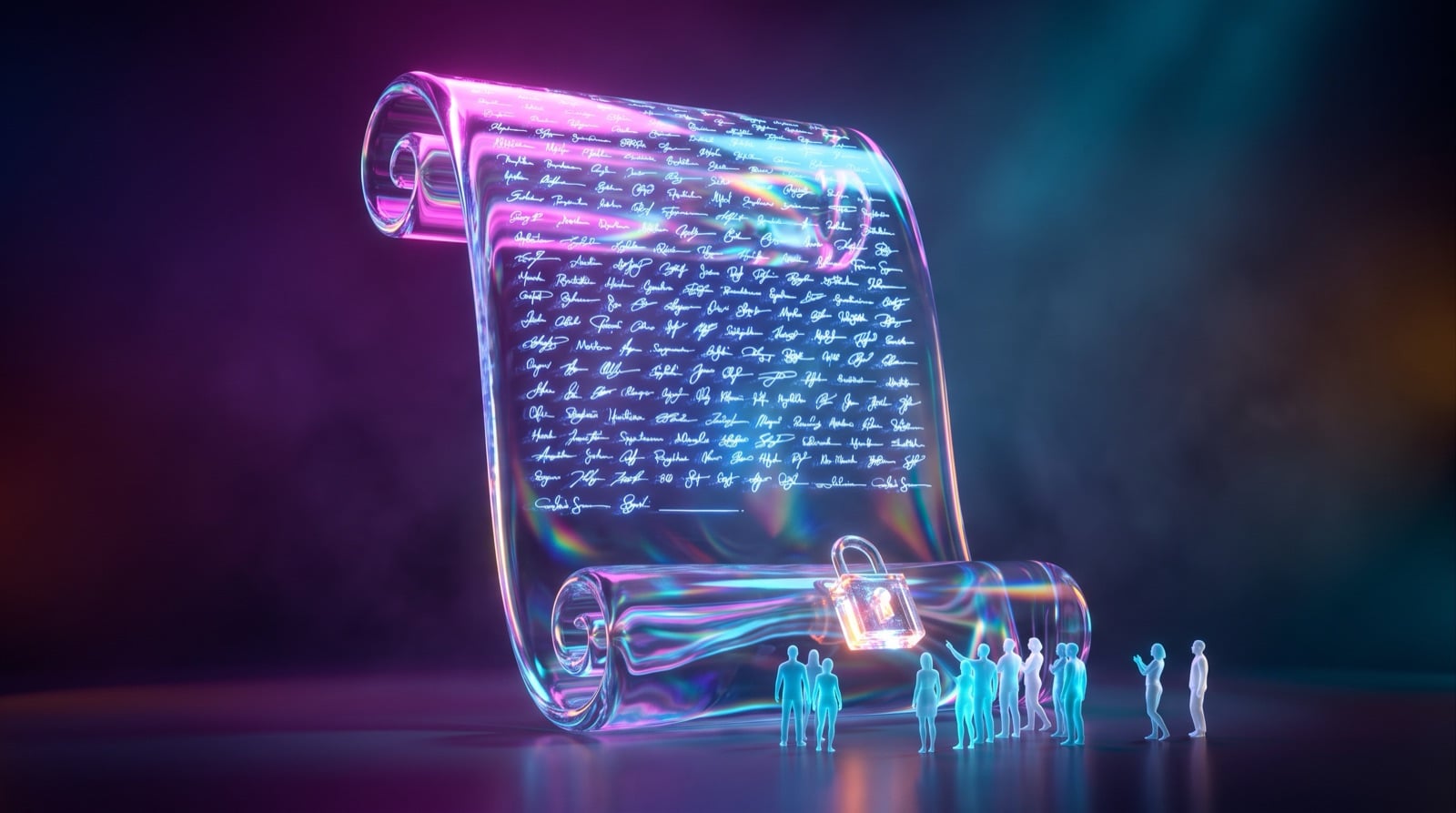
77 companies signed one letter that basically says "let models stay open" - and Anthropic, the company that built its entire brand on safety, is the only major player that refused to sign. Jensen Huang, CEO of Nvidia, published a letter on July 24th called "Open Weights and American AI Leadership," and within two days the list ballooned from 25 companies to 77: OpenAI, Google, Microsoft, Meta, Nvidia, Hugging Face, Mistral, Mozilla, Ollama and SpaceX all signed. Anthropic - didn't.
Let's break this down slowly, because under the headline "another industry letter" hides a debate that matters a lot to all of us - especially those of us building on open source.
What "open weights" even means - and why we should care
When you train a language model, the final result is a massive pile of numbers called weights - basically everything "the model learned." Think of it like a full recipe for a dish: not just "there's a cake here," but exactly how much of each ingredient at every step. An open-weights model is one where the company published its weights file for free download, so anyone can grab it, run it on their own machine, tweak it and build on top of it - without paying anyone per query.
That's exactly the fuel of the open-source AI community. When a company like Meta releases Llama, or when Mistral and DeepSeek release open models, millions of developers, startups and researchers build on top of them without asking anyone for permission. That's what lets us run AI without depending on a single company, without sending our data to someone else's cloud, and without anyone suddenly cutting off access or hiking the price.
And that's where the real tension is: once an open model ships, you can't take it back. There's no "delete button." Everyone who downloaded the file keeps it forever.
The letter: 77 signatures in two days
The letter itself makes three simple claims: open weights expand access (a small startup can build on a strong model without training its own from scratch, which costs tens of millions), they strengthen competition (instead of three or four closed companies controlling the whole market), and they give the customer control (we own the model, we're not renting it). The line that got under Anthropic's skin the most was this one: "Openness may be one of the most important paths to AI safety and security."
The political backdrop matters here for the timing. A few days earlier, Axios reported that the Trump administration was considering restricting Chinese open-source models. The letter is basically the industry's response: "don't block the open ones." Jensen Huang posted it as his very first post ever on X, and it racked up tens of millions of views. And what happened next was a snowball - the list doubled within a day.
And here's the jarring part: the more companies signed, the more the one company that didn't stood out. David Sacks, former "AI czar" of the Trump administration, wrote: "The entire tech industry (except Anthropic) came out in favor of open-source AI." Kai-Fu Lee, a veteran of the field, added: "Whoever didn't sign the letter is far more interesting than whoever did."
Anthropic's response - and fairness demands we listen
Now let's be fair here, because Anthropic actually has a real argument, not just "they're the villain of the story." On July 27th they published an official position, and it opens sharply: "Anthropic has never called for banning open-weight models." They even agree with most of the letter - that open models without dangerous capabilities are a public good, that they expand access and strengthen competition.
So what exactly do they disagree with? One word: that openness necessarily improves safety. CEO Dario Amodei gives a chilling example - a model powerful enough could help someone weaponize a pandemic-level virus, while defending against such a threat is "an operational task measured in years." In other words: when it comes to bioweapons, "more eyes on the code" doesn't necessarily help defenders more than attackers, because the attacker only needs to succeed once, while the defender needs to succeed every single time.
Instead of a blanket ban, Anthropic proposes three alternative steps:
It's a coherent position, and parts of it are simply correct. The problem isn't what Anthropic is saying - it's what their silence does on the ground.
The sharp critique: when safety becomes a moat
Here's where, in my view, Anthropic crosses a line. First, the context: according to Axios, government officials described leading AI labs approaching them "every three to five months with a proposal to ban open-source models." Anthropic is one of those labs. So when it refuses to sign a letter that's entirely about "don't ban the open ones," it's not really staying neutral - it's leaving the door open for regulation that would hurt exactly the small players the most.
Second, Anthropic only sells access to closed models. They don't have a single open model. Bill Gurley, veteran investor at Benchmark, said what a lot of people were thinking: Anthropic "is trying to preserve its position in the race." When the company that benefits most from keeping powerful models closed is also the one most hesitant to defend openness, it's hard not to ask about the conflict of interest. The safety argument is real, but it also happens to be, exactly, the perfect business moat: when you only sell closed, "open is dangerous" is simultaneously a moral stance and a business model.
Third, and this is the part that stings the community the most: when the lab that branded itself as the industry's "safety conscience" refrains from defending open source, it hands regulators moral cover to shut it down. Hugging Face, Mistral, Mozilla, Ollama - everyone actually building the open infrastructure - signed. They're on the line. Anthropic, with all the moral weight it's accumulated, chose not to stand with them. And that, in my view, hurts exactly the people who need backup the most.
So what do we do with this
Let's be precise in the critique too. Anthropic is right that a bio threat isn't a regular bug, and that weights once released truly can't be pulled back. That's not paranoia, that's risk math. And none of us actually wants a model that teaches you to engineer a pandemic sitting there as a free download.
But there's a huge difference between "let's vet powerful models before release" (reasonable, and even Anthropic proposes this) and "let's leave the door open to banning open source" (dangerous for all of us). And in my view, when the company that benefits most from staying closed refuses to stand with the open side, it can't be surprised that people call it exactly what it looks like. Safety is a real argument. It just also happens, in this case, to be worth a whole lot of money.
The question that stays with me is this one: if even the "safest" company in the industry isn't willing to sign a letter defending open source - who will?